
Plant & Shrub Care
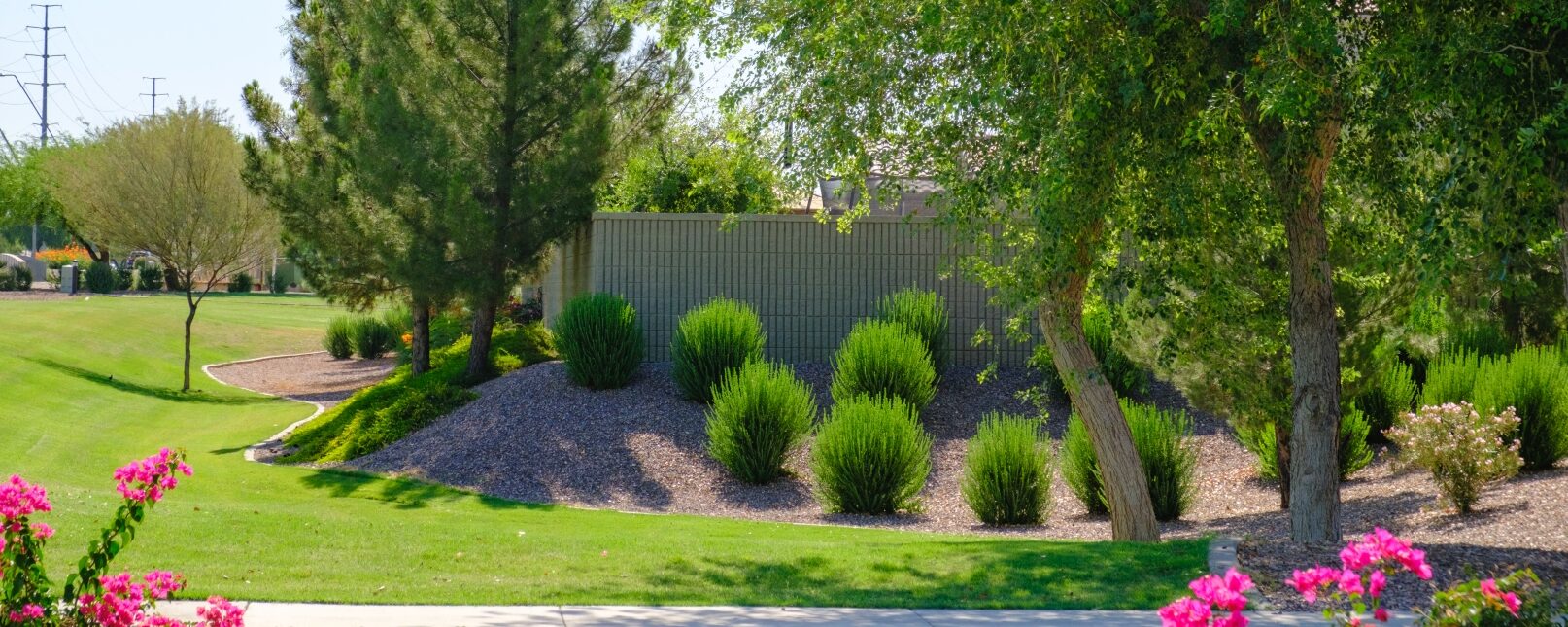
Professional Plant Care for Phoenix HOA Landscapes
Shrubs and ornamental plants shape the appearance of an HOA landscape at eye level. When they are maintained appropriately, they provide color, texture and a natural sense of scale throughout entrances, streetscapes and common areas. When they are overpruned, stressed or poorly managed, the difference is easy for residents to see.
Four Peaks Landscape provides professional plant and shrub care for HOAs and master-planned communities throughout the Phoenix metro area. Our approach emphasizes horticulturally appropriate pruning, proactive plant health practices and pest prevention to support healthy growth and the natural appearance of Arizona landscapes.
Instead of simply keeping plants cut back, Four Peaks focuses on maintaining them in a way that respects how they grow.
Horticulturally Appropriate Shrub Pruning
Pruning should have a purpose.
Shrubs are sometimes repeatedly sheared into tight geometric shapes regardless of their natural growth habit. While that approach may create a uniform appearance in the short term, it is not appropriate for every plant or every landscape.
Four Peaks takes a horticulturally informed approach to pruning based on plant type, growth characteristics, location and landscape objectives.
Depending on the property and scope, plant and shrub care may include:
- Horticulturally appropriate pruning
- Selective pruning
- Seasonal pruning
- Removal of dead or damaged growth
- Plant health monitoring
- Pest and disease observations
- Preventive plant care
- Fertilization and soil management
- Irrigation observations
- Plant replacement recommendations
- Ongoing landscape evaluations
The objective is to maintain an attractive community while supporting the health and natural character of its plant material.
Natural Pruning for Arizona Landscapes
Many desert-adapted shrubs have attractive natural forms when they are given enough space and maintained appropriately.
Selective pruning can help manage plant size and remove unwanted growth without automatically forcing every shrub into the same shape. This can create a softer, more natural appearance that complements the Sonoran Desert environment.
It can also help reveal the individual character of plants that may otherwise disappear into rows of heavily sheared shrubs.
For communities interested in a more sustainable landscape management approach, pruning practices are an important place to start. Santa Rita's related landscape management philosophy has emphasized reducing unsightly overgrowth while supporting plant health and beauty through sustainable management practices.
Plant Health in the Phoenix Climate
Plants in Phoenix face demanding conditions.
Extreme summer temperatures, low rainfall, irrigation dependency and challenging soil conditions can all influence landscape performance. Plants growing successfully in one location may struggle in another because of differences in sun exposure, water availability or surrounding conditions.
Four Peaks considers these factors as part of ongoing plant care.
When a shrub begins to decline, the answer is not always more pruning, more fertilizer or more water. Looking at the larger landscape conditions can help identify what may be contributing to poor performance and determine an appropriate response.
Pest Prevention and Plant Monitoring
Pest issues can affect the health and appearance of ornamental plants throughout a community.
Routine landscape care provides an opportunity to observe plant material and identify visible changes before they become widespread concerns. When appropriate, preventive and corrective treatments can be incorporated into the plant health program.
The goal is proactive management rather than waiting until significant damage is obvious throughout the landscape.
Plant health should also be considered alongside irrigation, soil conditions and seasonal stress since similar symptoms can sometimes have different causes.
Irrigation and Healthy Plant Growth
In an Arizona landscape, plant care and irrigation are closely connected.
Too little water can contribute to plant stress while excessive irrigation can create other problems. Changes in plant size and maturity can also affect water requirements over time.
Four Peaks' irrigation capabilities allow our team to consider water delivery alongside the plants it supports.
When recurring plant problems appear in a particular area, an Irrigation System Evaluation & Audit or other irrigation review can help determine whether water delivery may be contributing to landscape performance.
Knowing When to Maintain and When to Replace
Good maintenance cannot make every plant successful forever.
Plants age. Site conditions change. Some shrubs outgrow the space originally provided for them while others may repeatedly struggle because they are poorly suited to a particular location.
Four Peaks helps community managers distinguish between plant material that can continue to be managed and areas where replacement or renovation may be the better long-term solution.
Through Landscape Renovation, aging or inappropriate plant material can be replaced as part of a more intentional update rather than continuing to invest in plants that no longer serve the community well.
Managing Overgrown HOA Landscapes
Overgrown vegetation is more than an aesthetic concern. It can make a landscape feel neglected and create an ongoing cycle of aggressive pruning.
Four Peaks can help established communities take a more strategic approach by evaluating plant size, placement and long-term maintenance needs.
In some areas, horticulturally appropriate pruning may restore a more natural appearance. In others, plants may have simply outgrown the space and replacement may provide a better long-term outcome.
This is where ongoing maintenance and landscape planning work together.
A Proactive Approach to Plant Care
Plant and shrub care is most effective when crews are not simply completing a checklist.
Four Peaks works to understand what is happening throughout the property, communicate developing concerns and help community managers plan appropriate next steps.
That aligns with Four Peaks' broader HOA approach. Community managers seek the company when they want proactive landscape management, better communication and reliable follow-through rather than having to continually direct their landscape provider.
Frequently Asked Questions About Plant & Shrub Care
What is horticulturally appropriate pruning?
Horticulturally appropriate pruning considers the plant's species, natural growth habit, condition and location when determining how and when it should be pruned rather than applying the same pruning style to every shrub.
Why is natural pruning beneficial for desert shrubs?
Selective pruning can help maintain an appropriate size while allowing shrubs to retain more of their natural form. The right technique depends on the individual plant and landscape objectives.
How does irrigation affect plant health in Phoenix?
Irrigation is a major factor in Arizona plant performance. Both inadequate and excessive watering can contribute to plant stress, which is why irrigation should be considered when evaluating recurring landscape problems.
Does Four Peaks provide pest prevention for landscape plants?
Pest prevention and plant health monitoring can be incorporated into landscape management based on property conditions and the agreed scope of service.
When should an HOA replace a shrub instead of continuing to prune it?
Replacement may be worth considering when plant material is declining, repeatedly struggling or no longer appropriate for its location. Four Peaks can help communities evaluate these situations as part of maintenance and landscape planning.
Maintain the Natural Character of Your Community
Healthy plants require more than regular trimming.
Four Peaks Landscape provides horticulturally informed plant and shrub care for Phoenix-area HOAs and master-planned communities, combining appropriate pruning, proactive monitoring and Arizona landscape expertise to support plant vitality and natural aesthetics.